How Breathing Patterns Impact Your Pelvic Floor Health
Take a slow, deep breath in. Now let it out. Did you notice anything happen at the very bottom of your pelvis?
Most people don’t. But every time you breathe, a group of muscles you rarely think about is quietly moving along with you. Your pelvic floor rises and falls with your breath, and at a typical resting rate of 12 to 20 breaths a minute, that adds up to well over 15,000 times a day. That’s a lot of reps for muscles most of us only hear about after having a baby or noticing a leak.
If you’ve been looking into pelvic floor physiotherapy in Vancouver, understanding this connection can be a helpful place to start. In this post, you’ll learn how your breath and pelvic floor work together, which breathing habits can add strain or tension, how your breath affects your nervous system and a few simple exercises to try at home. We’ll also be honest about what breathing can and can’t do on its own.
Breathing and Your Pelvic Floor: A Built-In Team
Your pelvic floor is a group of muscles that stretches like a hammock across the bottom of your pelvis. It supports your bladder, bowel and, for some people, the uterus. It helps with bladder and bowel control, and it plays a role in sexual function for people of every sex.
Your diaphragm is the dome-shaped muscle under your ribs that does most of the work when you breathe. Together with your deep abdominal muscles and the small muscles along your spine, these two form a kind of canister around your middle. The diaphragm is the lid, the pelvic floor is the base and your abdominal and back muscles are the walls.
The Piston Effect
The diaphragm and pelvic floor usually move together, a bit like a piston in an engine:
- When you breathe in, your diaphragm moves down. The pressure inside your belly rises a little, and your pelvic floor gently lengthens and lowers to make room.
- When you breathe out, your diaphragm rises back up, and your pelvic floor gently lifts and recoils.
This happens automatically, without you thinking about it. It also helps your body manage pressure during everyday tasks, like lifting groceries, coughing or laughing. When the system works smoothly, pressure is shared across the whole canister instead of pushing down hard on one spot.
Breathing Habits That Can Affect Pelvic Floor Tension
Most of us pick up breathing habits without noticing. Some of them can change how your pelvic floor moves or how much pressure it has to handle. These patterns won’t cause problems for everyone, but they’re worth knowing about:
| Breathing habit | How it can affect your pelvic floor |
| Shallow chest breathing | Breathing mostly into your upper chest means your diaphragm moves less, so your pelvic floor may get less of that gentle lengthening with each breath. |
| Holding your belly in | Constantly sucking in your stomach, whether for posture or appearance, can limit how your belly and pelvic floor move as you breathe. Over time, some people find their pelvic floor stays a bit “on.” |
| Holding your breath during effort | Holding your breath while lifting, pushing or getting up from a chair can create a spike of pressure that pushes down on your pelvic floor. |
| Straining on the toilet | Bearing down hard while holding your breath adds extra downward pressure, especially if it happens often. |
| Fast, anxious breathing | Quick, shallow breaths during stress often come with bracing through your belly, jaw and pelvic floor. |
| A long-term cough | Frequent coughing, from asthma, allergies or smoking, puts repeated pressure on your pelvic floor. |
Too Tight or Too Weak?
Pelvic floor problems aren’t always about weakness. Some people have muscles that don’t contract well enough, which can contribute to leaks or a feeling of heaviness. Others have muscles that hold too much tension and have trouble letting go, which can contribute to pelvic pain, pain with sex, trouble starting to pee or constipation. Many people have a mix of both. Your breathing habits can play a part in either picture, which is why it’s worth looking at how you breathe, not just how hard you can squeeze.
Your Breath, Your Nervous System and Pelvic Floor Relaxation
Your nervous system has two main modes. The sympathetic side is your “fight or flight” mode, which gears you up for action. The parasympathetic side is your “rest and digest” mode, which helps your body slow down and recover. You need both, but many people spend a lot of time stuck in the first one.
When you’re stressed, your body tends to brace. Shoulders creep up, your jaw clenches and, for many people, the pelvic floor tightens too. If that bracing becomes a habit, your pelvic floor may have trouble fully relaxing, even when you’re safe and calm.
How Slow Breathing Helps You Shift Gears
Your breath is one of the few parts of your nervous system you can control on purpose. A 2022 systematic review and meta-analysis of 223 studies found that slow, deliberate breathing increased heart rate variability linked to the parasympathetic nervous system. That boost showed up during the breathing practice, right after a single session and after several weeks of regular practice. In simple terms, slow breathing helps nudge your body toward “rest and digest.”
That review didn’t look at the pelvic floor directly, so it doesn’t prove that slow breathing will relax your pelvic floor muscles. But when your whole body feels calmer, it’s often easier to let go of tension in the areas that tend to brace, and the pelvic floor is one of them. Many pelvic floor physiotherapists use slow breathing as one tool to help decrease tension, especially alongside hands-on care and education.
Diaphragmatic Breathing and Other Exercises to Try at Home
These exercises are gentle and low-risk for most people. Go at your own pace, and stop if anything causes pain or dizziness.
1. 360-Degree Diaphragmatic Breathing
This helps your diaphragm and pelvic floor move together again. To practise:
- Lie on your back with your knees bent, or sit tall in a supportive chair.
- Place your hands around the sides of your lower ribs.
- Breathe in slowly through your nose and feel your ribs widen into your hands, front, sides and back, like an umbrella opening.
- Let your belly soften as you breathe in, rather than sucking it in.
- Breathe out slowly through your mouth and feel your ribs gently close.
- Repeat for 3 to 5 minutes.
2. Breath and Pelvic Floor Connection
Once you’re comfortable with the first exercise, add your pelvic floor into the picture:
- As you breathe in, imagine your sit bones gently spreading apart and your pelvic floor softening and lowering.
- As you breathe out, let your pelvic floor naturally rise back up. You don’t need to squeeze, just notice the gentle lift.
- Repeat for 5 to 10 slow breaths.
If you find it hard to feel anything, that’s normal at first. Try sitting on a firm chair or a rolled towel, which can make the movement easier to notice.
3. Longer Exhale Breathing for Relaxation
This exercise focuses on calming your nervous system. To practise:
- Breathe in gently through your nose for a count of 4.
- Breathe out slowly through your mouth for a count of 6, as if you’re fogging up a window.
- Keep going for 3 to 5 minutes, at a pace that feels comfortable rather than forced.
4. Exhale on Effort
This one is for everyday life. Instead of holding your breath when you lift a laundry basket, stand up from a chair or pick up a child, breathe out gently as you do the hardest part of the movement. It helps spread the pressure across your whole core instead of pushing it down onto your pelvic floor.
How Pelvic Floor Physiotherapy in Vancouver Can Help
Breathing is a helpful tool, but it isn’t a complete treatment on its own. Here’s where it’s important to be honest about the research. A 2023 systematic review of breathing exercises for pelvic floor problems looked at 18 studies on urinary leakage and pelvic organ prolapse. It found that pelvic floor muscle training was more effective than breathing exercises for improving muscle function, leakage and prolapse symptoms, and that adding breathing exercises to that training didn’t give extra benefit.
So, if you’re dealing with leaks or a feeling of heaviness, breathing exercises shouldn’t replace targeted pelvic floor training. Breathing tends to be most useful as part of a bigger plan, especially when tension, stress or pain are part of the picture.
What a Pelvic Floor Assessment Looks Like
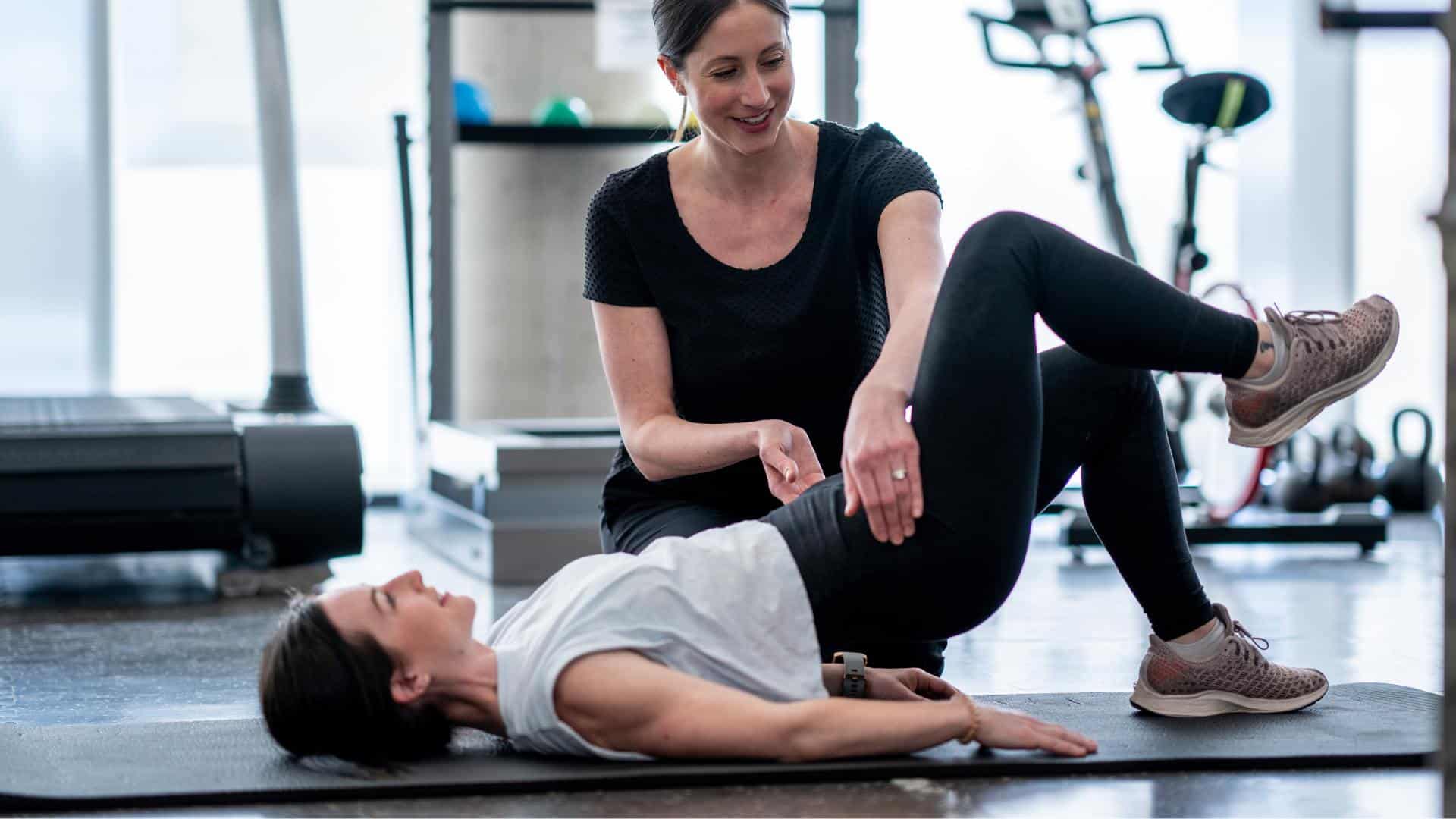
A pelvic floor physiotherapist looks at how all the pieces work together. Your assessment may include:
- a conversation about your symptoms, health history and goals
- a look at how you breathe, sit, stand and move
- checking your ribs, abdomen, hips and lower back
- an internal exam, with your consent, to see how well your pelvic floor contracts and relaxes
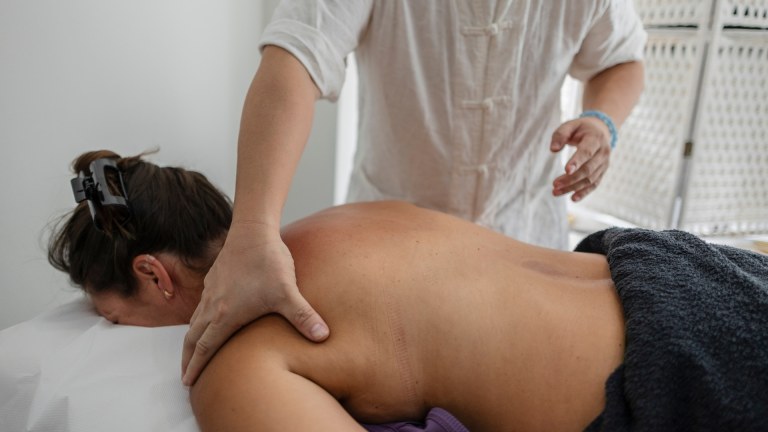
From there, your physiotherapist can build a plan that may include pelvic floor muscle training, relaxation and breathing work, education about pressure and bladder or bowel habits, and gentle hands-on techniques to help decrease tension.
Signs It’s Time to Get Checked
It’s worth booking an assessment if you notice any of the following:
- leaking when you cough, sneeze, laugh, lift or exercise
- a strong, sudden urge to pee that’s hard to hold
- a feeling of heaviness or bulging in your pelvis
- pain in your pelvis, tailbone, genitals or during sex
- constipation or trouble fully emptying your bladder or bowels
Some symptoms need medical care first. See a doctor promptly if you notice blood in your urine or stool, unexplained weight loss or new pelvic pain with fever. Go to an emergency department right away if you suddenly lose control of your bladder or bowels, especially with numbness around your groin or inner thighs or new weakness in your legs.
The Bottom Line on Pelvic Floor Physiotherapy in Vancouver
Here’s a quick recap:
- Your diaphragm and pelvic floor move together with every breath, like a piston.
- Habits like breath holding, shallow chest breathing and constantly holding your belly in can change how your pelvic floor handles pressure.
- Stress often shows up as bracing, and your pelvic floor can be part of that.
- Slow breathing with a longer exhale can help shift your body toward “rest and digest,” which may make it easier to decrease tension.
- For leaks and prolapse, pelvic floor muscle training is more effective than breathing exercises alone.
- A pelvic floor physiotherapist can help you put all the pieces together.
Your breath is a tool you carry everywhere, and learning to use it well can be a great first step. At Hartwell Therapy, our pelvic floor physiotherapists can assess how your breathing, posture and pelvic floor work together and build a plan that fits your body and your goals.
Whenever you’re ready, we’d be happy to help you take the next step with pelvic floor physiotherapy in Vancouver.
References
Bø, K., Driusso, P., & Jorge, C. H. (2023). Can you breathe yourself to a better pelvic floor? A systematic review. Neurourology and Urodynamics, 42(6), 1261–1279. https://doi.org/10.1002/nau.25218
Laborde, S., Allen, M. S., Borges, U., Dosseville, F., Hosang, T., Iskra, M., Mosley, E., Salvotti, C., Spolverato, L., Zammit, N., & Javelle, F. (2022). Effects of voluntary slow breathing on heart rate and heart rate variability: A systematic review and a meta-analysis. Neuroscience and Biobehavioral Reviews, 138, Article 104711. https://doi.org/10.1016/j.neubiorev.2022.104711