
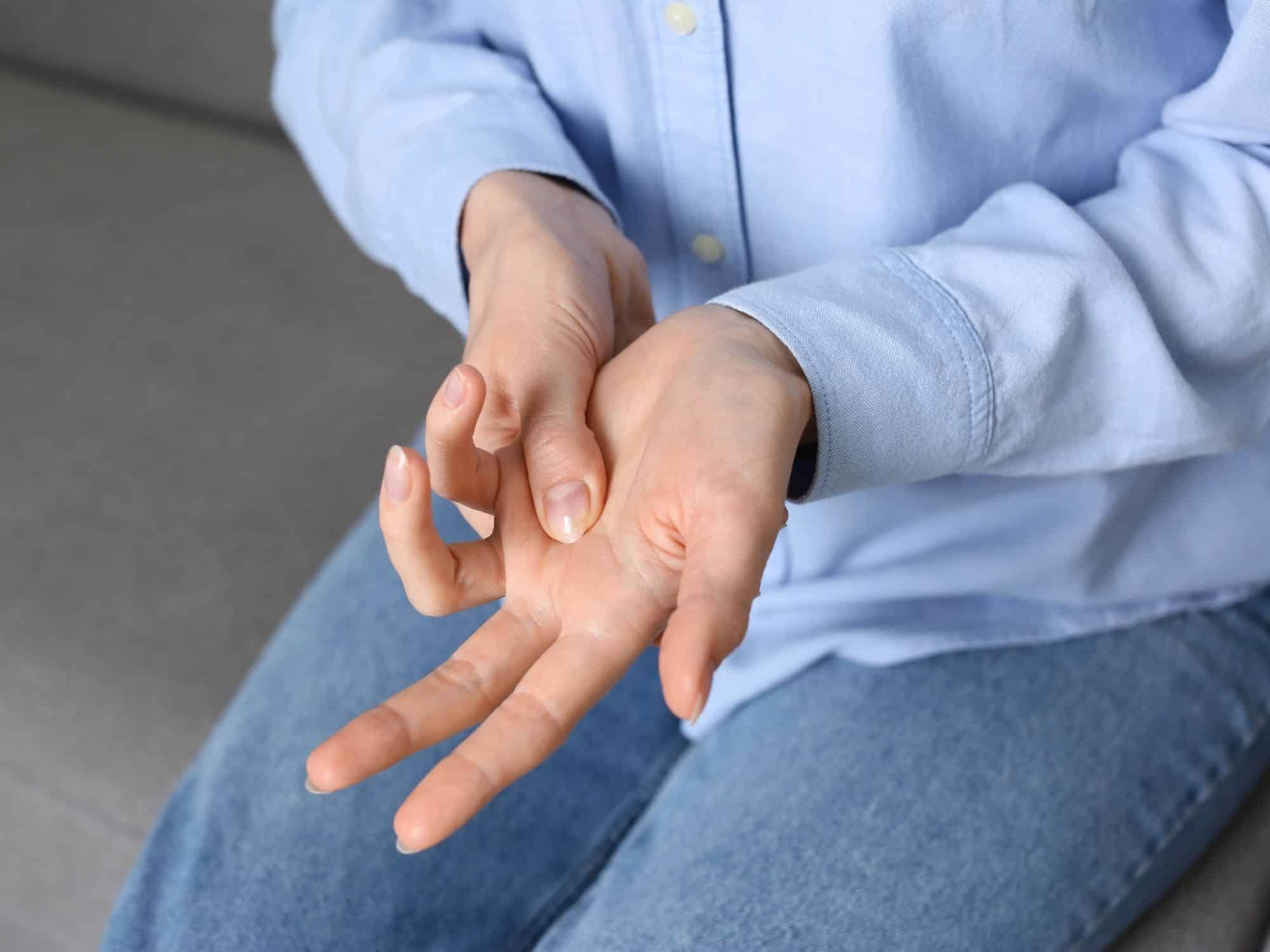
Trigger Finger: Why Does My Finger Get Stuck When I Bend It?
A finger that catches, clicks, or becomes physically stuck in a bent position can be both frustrating and alarming. This sensation, often referred to as locking, usually indicates an issue with the tendons, ligaments, or joints that coordinate fine motor movement.
At Hartwell Therapy in Vancouver, we help patients move past the frustration of a locked finger by identifying the specific structural cause and providing targeted rehabilitation to restore fluid motion.
5 Common Reasons Your Finger Is Getting Stuck
Understanding why a finger gets stuck is the first step toward effective treatment. Here are five of the most frequent clinical causes we see in our Vancouver clinic.
1. Stenosing Tenosynovitis (Trigger Finger)
Trigger finger is the most common reason for a finger getting stuck. It occurs when the tunnel (sheath) that your tendon slides through becomes inflamed or thickened. This creates a bottleneck effect. As you bend your finger, a small nodule on the tendon gets caught on the edge of the sheath, causing a snap, pop, or a complete lock in the palm.
2. Finger Joint Osteoarthritis
Osteoarthritis can cause the cartilage within the finger joints to wear down. This can result in the formation of bone spurs (osteophytes) that physically interfere with the joint’s ability to glide. If you notice stiffness in the morning that takes a long time to loosen up, or if your finger joint feels enlarged, arthritis may be the driver.
3. Volar Plate Injuries
The volar plate is a thick ligament that prevents the finger joints from hyperextending. If this ligament is sprained or jammed, common in sports or falls, it can become scarred or displaced. This scarring can interfere with the mechanics of the joint, causing a catching sensation when you try to move from a bent to a straight position.
4. Dupuytren’s Contracture
This is a condition where the layer of tissue under the skin of your palm (the fascia) begins to thicken and tighten. While it doesn’t always cause a “click” like trigger finger, it can create a permanent bend in the finger, making it feel stuck and unable to straighten fully. It often starts as a small, painless lump in the palm.
5. Tendon Scarring or Adhesions
Following an old injury or surgery, scar tissue can form around the tendons. These adhesions act like glue, preventing the tendon from sliding smoothly through its protective canal. This creates a mechanical tethering effect where the finger feels restricted or stuck at a specific point in its range of motion.
Trigger Finger Symptoms to Watch For
If you suspect trigger finger, the symptoms usually follow a progressive pattern:
- A painful clicking or snapping sensation when bending or straightening the finger.
- Finger stiffness, especially in the morning, which improves with movement.
- A tender lump (nodule) at the base of the finger in the palm of the hand.
- The finger becomes locked in a bent position, requiring you to manually pop it straight with your other hand.
Why Professional Care Is Essential
Many people try to ignore a stuck finger, hoping it will resolve with rest. However, repetitive locking can lead to further inflammation and permanent stiffness.
At Hartwell Therapy, we emphasize that early intervention is almost always faster and more
effective. If the mechanical obstruction is left untreated, the tendon sheath can become permanently scarred, making conservative treatment more difficult.
How Hand Therapy Helps
Restoring smooth movement involves more than just stretching the finger.
Custom Splinting
We may provide a custom-made, low-profile splint that keeps the affected joint in a neutral position. This allows the inflammation in the tendon sheath to subside without the constant irritation caused by clicking and catching.
Tendon Gliding Exercises
Targeted exercises help the tendon move through its sheath without triggering the lock. These specific movements maintain mobility in the other joints of the hand while focusing on the healing of the affected area.
Neuromuscular Down-Regulation
We use soft tissue therapy to reduce the protective muscle guarding in the forearm and palm. Often, the muscles that control the fingers become overworked and tight as they try to “force” the finger through its stuck position.
When to See a Therapist in Vancouver
A finger that gets stuck is a signal that the local mechanics are compromised. Consider booking an assessment if:
- You have to use your other hand to straighten your finger.
- The clicking is accompanied by significant pain or swelling.
- You are losing grip strength or the ability to perform daily tasks.
- The stiffness persists for more than two weeks.
Reclaiming Fluid Movement
Your hands are your primary tools for interacting with the world. A locked finger shouldn’t be something you simply live with. With the right combination of splinting, exercise, and clinical guidance, most causes of finger locking can be managed effectively without surgery.
At Hartwell Therapy in Vancouver, we are dedicated to helping you regain the smooth, pain-free movement you need for work, hobbies, and daily life.